
Department of Fisheries and Aquatic Environment
Department of Fisheries
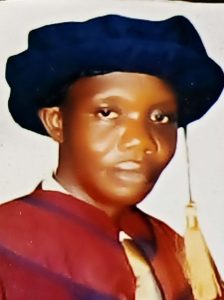
DR. OTENE BENJAMIN BAMEYI
The Current Head of Department
View Profile (opens in a new tab)
Fisheries
The Department presently runs programmes that lead the award of B.Sc. Fisheries, Postgraduate Diploma (PGD) in Aquaculture and Fisheries Biology & Management, Masters of Science (M.Sc.) in Aquatic Ecology, Aquaculture and Fisheries Biology & Management, Master of Philosophy (M.Phil.) and Doctor of Philosophy (PhD) Degrees in Fisheries Biology and management and Aquaculture.
The normal duration of B.Sc. Fisheries programme is a minimum of five sessions (10 semesters) comprising tutorials, lectures, practicals, and supervised industrial work experience scheme (SIWES) in the 4th year of programme.
Staff list in the Department
NAME | RANK | AREA OF SPECIALIZATION Dr S.N. Deekae | Senior Lecturer | Hydrobiology/ Fisheries Biology & Management Dr U.U. Gabriel | Senior Lecturer | Fish Nutrition Aquatic Toxicology; Fisheries Biology Dr O.A. Davies | Lecturer 1 | Fisheries Hydrobiology Dr A.D.I. George | Lecturer 1 | Aquaculture, Fisheries Biology & Management D.Amachree | Assistant Lecturer | Aquatic Toxicology, Aquaculture/ Fisheries Biology K.O.Chukwu | Graduate Assistant | Fisheries Biology & Management Dr R.I.Keremah | Senior Lecturer (Adjunct) | Zoology Fisheries/ Aquaculture Fish Nutrition Prof J. F. Alfred-Ockiya | Professor (Adjunct) | Fisheries Biology Natural Resource Prof E.B.C. Ufodike | Professor (Adjunct) | Zoology Fisheries Biology Aquaculture
Career Opportunity
Graduates of Fisheries and Aquatic Environment Management will find employment opportunities in the following areas;-
Civil service as;
(a) Fisheries Officers
(b) Environmental Officers in Federal and State Ministries of Environments.
Research Institutes – as Research Officers in establishments such as; Nigerian Institute for Oceanography & Marine Research (NIOMR), National Institute for Freshwater Fisheries Research (NIFFR), etc.
1. Lecturers in universities, Monotechnics and Polytechnics,
2. Aquacultural Enterprises.
3. Oil and Non- Oil industries as Environmental Experts/ Advisers.
4. Fishing Industries and Fish Marketing Enterprises.
5. Food Processing Induatries.
University Requirements
(a) J.M.E. ENTRY REQUIREMENTS (YEAR 1)
(b) SC GCE ‘0’ Level/ SSSC with credit passes in 5 appropriate subjects
Including English Language and Mathematics obtained in not more
More than two (2) sittings; in some cases a pass in either English
Language or Mathematics may be acceptable.
PHILOSOPHY OF THE PROGRAMMES
The emergence of sustainable development as a major global policy thrust has made it imperative for nations to re-design their education curricula to address the underlying problems of their populace. Key issues such as management and conservation of aquatic resources have currently become topical. The Rivers State University of Science and Technology is located in Niger delta, where the people depend largely on the aquatic resources for their sustenance. The Department of Fisheries and Aquatic Environment Management therefore was conceptualized to provide and develop a sound understanding of environmental and natural aquatic resources management. The philosophical underpinning is that, with a training that emphasizes holistic understanding of the interdisciplinary complexities underlying Fisheries and aquatic Environment Management, sustainable exploitation and development of our natural resource would be guaranteed. The Department is thus, being re-positioned to provide a very high standard of training for fisheries and environmental scientists who are expected to be leaders in their fields nationally and internationally. It is needed to grapple with the problems and sensitivities of the Niger Delta and other aquatic or riverine communities.
OBJECTIVE
The objectives of the Department of Fisheries and Aquatic Environment Management are to;
1. Provide professionals equipped with multi-disciplinary perspective in dealing with fisheries and aquatic environment managrment.
2. Provide appropriate manpower equipped to established and run profitably, fisheries and aquaculture enterprises profitably.
3. Promote efficient fish production and sustainable exploitation of natural aquatic resources.
4. Promote fish production and productivity by artisanal fishers/ fish farmers in order to boost fisheries and rural developmental programmes.
5. Promote ecological development, ie. a developmental programme under a carefully managed environment.
6. Promote the exploitation and exploration of the continental shelf of the West African sub-region.
Staffs
| Name | Role | Rank / designation | Area of expertise | |
|---|---|---|---|---|
| D.Amachree | Assistant Lecturer | Assistant Lecturer | Aquatic Toxicology, Aquaculture/ Fisheries Biology | — |
| Dr A.D.I. George | Lecturer 1 | Lecturer 1 | Aquaculture, Fisheries Biology & Management | — |
| Dr O.A. Davies | Lecturer 1 | Lecturer 1 | Fisheries Hydrobiology | — |
| Dr R.I.Keremah | Senior Lecturer (Adjunct) | Senior Lecturer (Adjunct) | Zoology Fisheries/ Aquaculture Fish Nutrition | — |
| Dr S.N. Deekae | Senior Lecturer | Senior Lecturer | Hydrobiology/ Fisheries Biology & Management | — |
| Dr U.U. Gabriel | Senior Lecturer | Senior Lecturer | Fish Nutrition Aquatic Toxicology; Fisheries Biology | — |
| K.O.Chukwu | Graduate Assistant | Graduate Assistant | Fisheries Biology & Management | — |
| Prof E.B.C. Ufodike | Professor (Adjunct) | Professor (Adjunct) | Zoology Fisheries Biology Aquaculture | — |
| Prof J. F. Alfred-Ockiya | Professor (Adjunct) | Professor (Adjunct) | Fisheries Biology Natural Resource | — |