News
RSU RESEARCHERS' MARINE THERMAL SIMULATOR RANKS AMONG TOP SIX AT NCDMB TECH-INNOVATION CHALLENGE
Researchers from Rivers State University (RSU) have recorded a significant milestone in indigenous technological innovation as their Marine Thermal Simulator (MATSI), an automated protective coating testing platform, emerged among the top six finalists of the maiden Nigerian Cont
Chuka ·
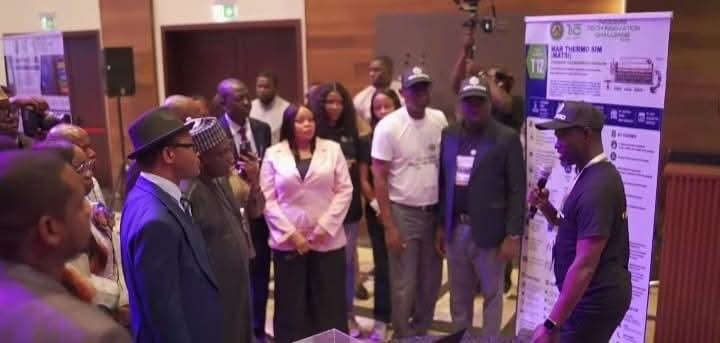
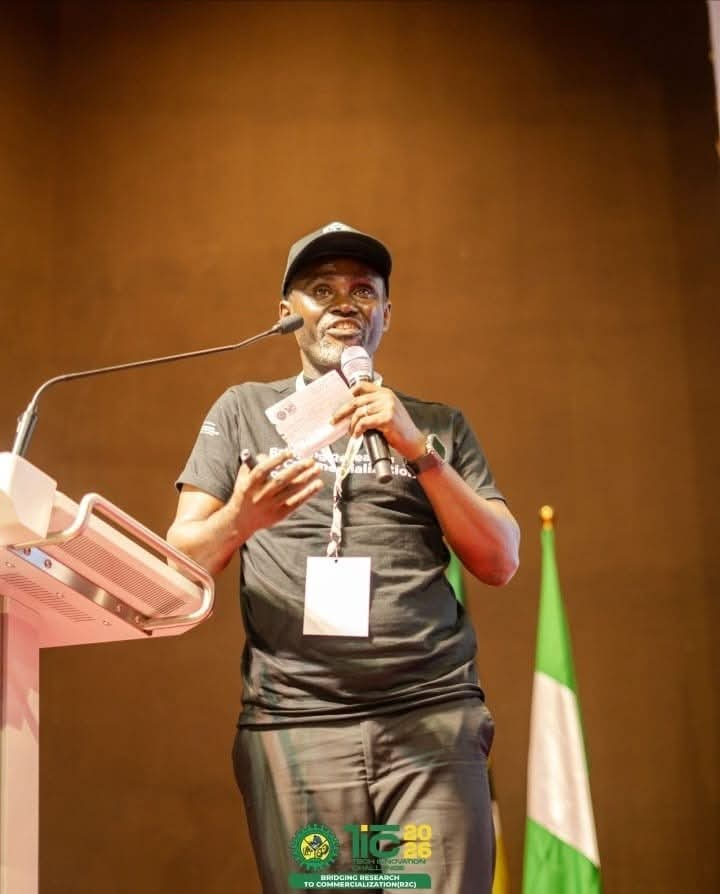
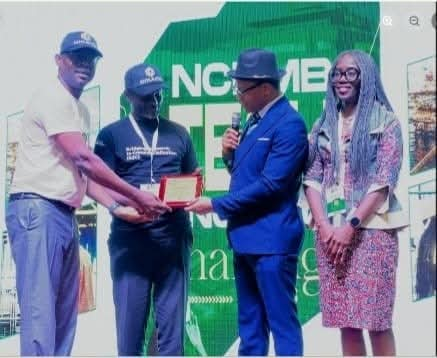
Researchers from Rivers State University (RSU) have recorded a significant milestone in indigenous technological innovation as their Marine Thermal Simulator (MATSI), an automated protective coating testing platform, emerged among the top six finalists of the maiden Nigerian Content Development and Monitoring Board (NCDMB) Tech-Innovation Challenge (TIC) 2026.
The innovation, officially designated the Automated Coated Coupon Testing Unit (ACCTU-001), is designed to evaluate the performance and durability of protective coatings under simulated marine, offshore and industrial environmental conditions.
MATSI was developed by Engr. Dr. Vincent Onuegbu Izionworu of the Department of Chemical/Petrochemical Engineering and Engr. Dr. Charles C. Orji of the Department of Marine Engineering, both in RSU's Faculty of Engineering, in collaboration with Engr. Dr. Watimiyo Charles James of Dikaioo Engineering & Energy Limited.
The TIC 2026 is an initiative of NCDMB's Planning, Research and Statistics Directorate aimed at identifying promising innovations from Nigerian universities and start-ups and advancing their readiness for adoption by the oil and gas industry. The maiden edition was implemented by Entrepreneurship and Innovation Centre Limited (EICL), led by its Chief Executive Officer, Chika Chinwah.
RSU's participation followed an internal memorandum dated January 12, 2026, concerning a call for entries published in The Guardian on December 17, 2025.
The competition attracted more than 100 applications, from which 30 innovations, including MATSI, were shortlisted. Following online pitching, 15 advanced to a five-day boot camp at the NCDMB Towers in Yenagoa, Bayelsa State. The programme featured mentorship and capacity-building sessions on technology development, commercialisation, business management, intellectual property protection and industry engagement.
Following the boot camp, the teams participated in an in-person pitching exercise, from which six finalists were selected to compete for the top three prizes.
The final assessment considered technical readiness, commercial traction, business viability, intellectual property protection, Nigerian content and sustainability. GeoPredict AI won first prize for its artificial intelligence platform for interpreting well logs for Nigerian independent operators. FrassPlus secured second prize for its bio-augmented crude oil spill remediation solution, while the Organic Battery, developed under the project name Metallocene, took third prize for its energy-storage technology for oil and gas infrastructure.
Although MATSI did not secure any of the three major prizes, its progression through the successive stages to the top six represents a notable achievement for the RSU research team and the University's innovation ecosystem.
MATSI features an automated testing platform that evaluates protective coatings under simulated marine, offshore and industrial conditions. It integrates independently controlled electrolyte tanks with programmable temperature, salinity and pH settings, alongside automated tidal and immersion cycling.
The system also incorporates infrared radiant heating, simulated flare-stack airflow and continuous in-situ monitoring of coated test specimens, known as coupons. These features enable researchers to assess coating performance under varying environmental stresses, including heat, chemical exposure, salinity changes and alternating wet and dry conditions.
A programmable logic controller (PLC)-based system, integrated with a human-machine interface (HMI), facilitates automated operation, data acquisition and real-time monitoring of environmental and coating performance parameters.
By combining immersion, drying, thermal, radiant, chemical, salinity, pH and convective stresses, MATSI provides a controlled and repeatable environment for evaluating protective coating durability.
Its potential applications span marine and offshore operations, oil and gas facilities, petrochemical installations and other industrial environments where protective coatings are essential for equipment preservation and corrosion management. The data generated could support coating manufacturers, research institutions and industrial operators in comparing coating systems and making informed material-selection and maintenance decisions.
Speaking at the competition, the Director of Planning, Research and Statistics at NCDMB, Silas Omomehin Ajimijaye, emphasised the importance of moving Nigerian innovations beyond academic research into practical industrial applications.
Similarly, the Director of Corporate Services and Chairman of the TIC 2026 Steering Committee, Abdulmalik Halilu, who represented the Executive Secretary of NCDMB, Felix Omatsola Ogbe, urged oil and gas operators to support indigenous technologies by providing opportunities for field trials, validation and commercial adoption.
NCDMB has also established a three-month post-competition incubation programme, scheduled for September to November 2026, to help selected innovations strengthen their technologies, improve commercial readiness and advance towards industry deployment.
MATSI's emergence among the six finalists highlights the research and innovation capabilities of RSU's Faculty of Engineering and the value of interdisciplinary collaboration between universities and industry.
The collaboration with Dikaioo Engineering & Energy Limited further demonstrates how academic research and engineering expertise can be translated into technologies addressing practical industrial challenges.
The achievement underscores the potential of locally developed engineering solutions to strengthen Nigeria's technological capacity, improve corrosion management and support indigenous innovation in the oil and gas sector.