

Institute of Pollution Studies
The rapid growth of industrialization and agriculture in Nigeria has been accompanied by an increase in the quantity and variety of pollutants released into the surrounding environment i.e. air, water, soil and…
Institute of Pollution Studies
Introduction
Institute of Pollution Studies
The rapid growth of industrialization and agriculture in Nigeria has been accompanied by an increase in the quantity and variety of pollutants released into the surrounding environment i.e. air, water, soil and vegetation.
These pollutants have become threats to the West African Ecosystem and may ultimately threaten the very survival of the people of Nigeria, Rivers State and other oil producing areas in particular.
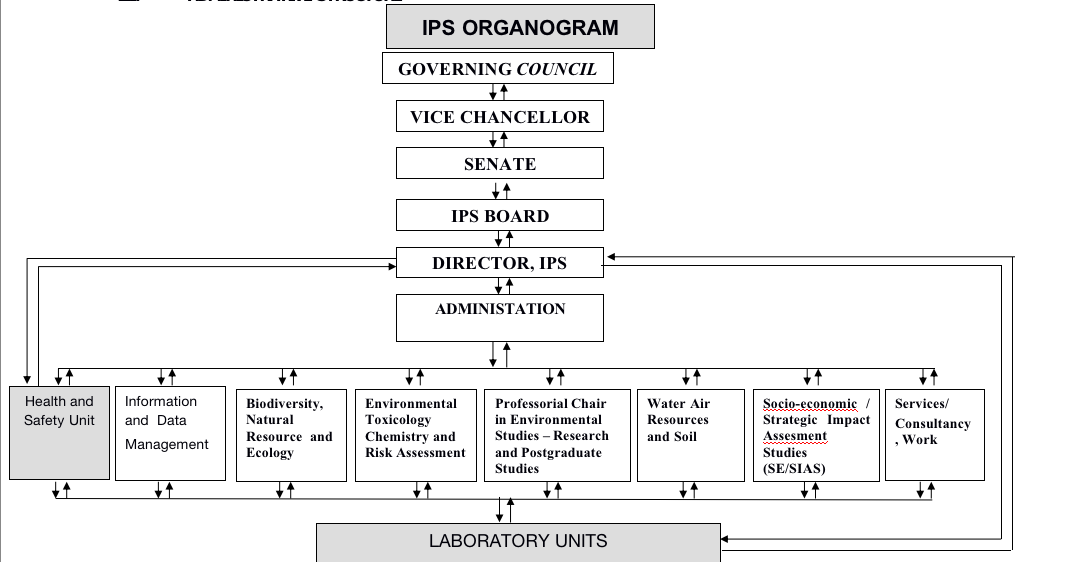
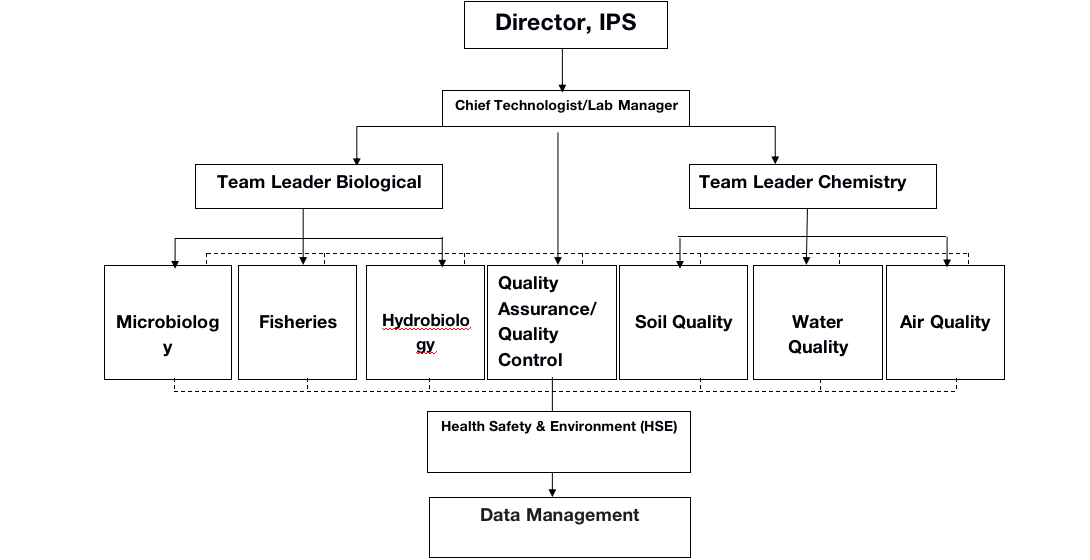
The Institute of Pollution Studies (IPS) was established in 1982 primarily for research, teaching and consultancy services. The Institute is headed by a Director, who coordinates the activities of the Institute through (i) Heads of Technical Units for Studies/Research and (ii) Administrative staff for administration.

Institute of Pollution Studies
Structure Of IPS
Office of the Director
- Administration Section
- Secretarial Section
Research & Development/Consultancy
Water Quality Unit
- Microbial Ecology Unit
- Field Chemistry
Hydrobiology Unit
- Microflora and Fauna
- Macroflora and Fauna
- Fisheries
- Benthos
Analytical Services Unit
- Environmental Chemistry
- Environmental Toxicology
- Organic/Inorganic Instrumentation
Objectives Of IPS
The Institute has the mandate to study the environmental problems of the Niger Delta in particular and Nigeria in general, as well as to serve as centre for excellence in environmental matters. The Institute provides scientific leadership and co-ordinates management of collaborative interdisciplinary research in the areas of environmental studies and protection.
The aim of IPS is to raise the Standard and Quality of Environmental Research in the Region and to ensure utilization of such research findings in Sustainable Environmental Management and Development.
Air Quality Unit
- Air Quality
- Noise/Vibration
- Meteorology/Climatology
- Radiation
Biodiversity/Terrestrial Ecology Unit
- Soil Quality (Chemical/Biological)
- Land Remediation
- Solid Waste Management
- Hydrogeochemistry/Biology)
- Hazardous Waste Management
- Crop Evaluation
- Vegetation
- Wild Life
Technical Capability
Institute of Pollution Studies Strength lies in our knowledge and experience acquired over the years about environmental studies of the Niger Delta Environment in particular. We have a team of qualified and highly motivated environmentalists. Depending on the peculiarity of a given project, IPS has the leverage to co-opt other professionals within and outside the University into any project as the need arises.
Regulatory Agencies
The statutory accrediting bodies/Regulatory Agencies of IPS are:
- Department of Petroleum Resources (DPR)
- Federal Ministry of Environment (FMEnv.)
- Rivers State Ministry of Environment (RSMEnv.)
- National Oil Spill Detection & Response Agency (NOSDRA)
- National Environmental Standards & Regulations Enforcement Agency (NESREA)
Socio-Economic and Health Studies Unit
- Epidemiological Survey
- Social, Cultural and Infrastructural
- Legal Studies
Achievements
Office/Laboratory Complex
From its inception in 1982 to March 2016, the Institute’s Administration was domiciled in a wing of the Faculty of Science building while the laboratory units were scattered on the campus at various times located in other departments and buildings (Chemistry Department, Petro-Chemical Engineering Laboratory, Old Site Toxicology building and Flat 1, Road D).
- From the Niger Delta Environmental Survey (NDES) project, IPS built a structure in 2000 to serve as guest house for future projects. Shortly after, the building was assigned by the University Management to First Bank and Health Service Laboratory. Presently, the University Management has assigned one wing of the building to Academic Staff Union of Universities (ASUU) as Secretariat and the other wing to Library & Information Science Department.
- An impressive IPS building Complex having both laboratories and offices was built from November 2015-March 2016.
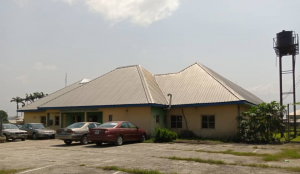
Institute of Pollution Studies Building
- An Atomic Absorption Spectrophotometer (AAS) and Hydride Generator were purchased in 2019 by the University Management.
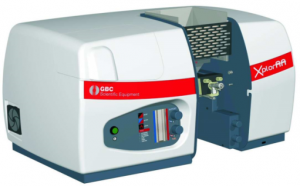
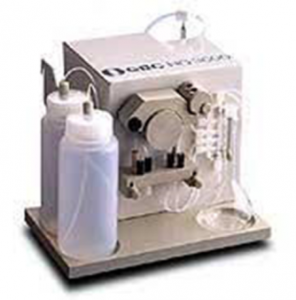
GBC XplorAA AAS and Hyddride Generator/Cold Vapout Unit
- A Gas Chromatograph-Mass Spectrometer (GC-MS) with Headspace Sampler was purchased for the Institute in April 2021. The Installation, Training of staff and Commissioning of the equipment is being awaited.
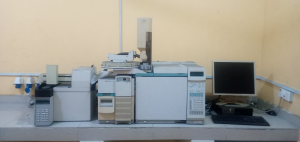
Agilent: 6890 Gas Chromatograph with 7683 Series Injector; 5973 Mass Selective Detector / 7694 Headspace Sampler
- A 30KVA Generator was purchased in April 2022 by University Management. The installation and commissioning of the generator is being awaited.
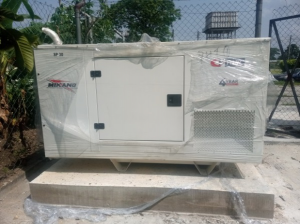
PS30 Mikano Generator
- Professional Chair in Environmental Studies: in recognition of the noble goal of IPS to raise the standard and quality of Environmental Research in the Region and to ensure utilization of such research findings in Sustainable Environmental Management endowed the Institute with the “shell Professional Chair in Environmental studies” from 1992 to 2011.
- Institute of Pollution Studies Successfully conducted various important Environmental Studies that have been and will continue to be reference points in and outside Nigeria. Notable among these projects are:
- Environmental Baseline studies for the Establishment of Control Criteria and Standards against Petroleum Related Pollution in Nigeria (RPI, 1983-1985) which gave rise to Environmental Guidelines and standards for the Petroleum Industry in Nigeria (EGASPIN, 1991).
- Environmental Impact Assessment (EIA) of Nitrogenous Fertilizer Factory Complex issued by the Department of Petroleum Resources National Fertilizer Company of Nigeria (NAFCON, 1984-1991).
- Niger Delta Environmental Survey Phase 2 (NDES, 1997-2000)
IPS Job Profile
1 | Environmental Baseline Studies for the establishment of control criteria and standards against Petroleum Related Pollution in Nigeria. 2 | Biological Baseline Data Acquisition at NNPC Installations. 3 | Baseline ecological Studies of Bonny South (Field) Location. 4 | Environmental Impact Assessment of the Nitrogenous Fertilizer Project. 5 | Oshika Oil Spill (NAOC Pipeline) Environmental Impact Assessment. 6 | Pilot Scheme on Local and cheaper Methods of Flood and Erosion control. 7 | Master Plan and Design of Flood and Erosion Control Measures in the Niger Delta. 8 | Engineering Design and Supervision of Flood and Erosion Control Measures in Five Towns and Villages in Rivers State. 9 | Tidal Tables for Nigerian Waters. 10 | New Finima Town Relocation Project. 11 | Determinations of environmental parameters for the Bonny NLNG port development. 12 | Nigerian Coastal Erosion Research Programme. 13 | Ebubu Ochoni Post Impact Studies. 14 | Baseline Studies at Elepa Fields. 15 | Ecological Baseline Data Collection in Soku Field (1990). 16 | Environmental Impact Assessment of the transmission system for the Nigerian LNG project (1990). 17 | Environmental Impact Assessment of Soku Gas Plant (1991). 18 | Environmental Impact Assessment of the AGIP NLG Pipelines (1992). 19 | Ecological Post Impact Studies of the Agip Irri’A’ Isoko South 2 and Samabiri East 3 Location (1992). 20 | Post Impact Assessment of Enwhe Spill for Shell Pet. Dev. Company (1992). 21 | Ecological Baseline Studies of Nembe IV Flowstation (1993). 22 | Bonny Estuary Spill Post Impact Study for Shell Pet. Dev. Company (1993). 23 | Environmental Impact Study of the Clough Creek – Tebidaba Pipeline Spillage for the Nigerian Agip Oil Company (1993). 24 | Environmental Impact Study of the Ebocha-Ogoda Pipeline Spillage for the Nigerian Agip Oil Company (1993). 25 | Ecological Post Impact Assessment of Ekulama II Flowstation (1994). 26 | Environmental Impact Assessment of the AGIP Ogbainbiri Flowstation and the Ogbainbiri-Tebidaba Pipeline (1994). 27 | Ecological Post Impact Assessment Studies of Belema Flowstation (1995). 28 | Environmental Impact Assessment of the Bonny Export Terminal for the NNPC (1995). 29 | Environmental Impact Assessment of Akiri/Oguta FEDP (1996). 30 | Post Impact Studies of the Oil Spillage site along Ogoda – Brass Pipeline near Odau (1996). 31 | Post Impact Assessment of Chanomi Creek Complex polluted by Shell Nigeria Limited (1984). 32 | Environmental Evaluation of Inda Well completion and development in oil mining concession 52 belonging to Chevron Nigeria Limited (1992). 33 | Environmental Impact Assessment of the Opuekeba pipeline project (OML 49) (1993). 34 | Environmental Baseline collection of environmental data for the offshore oil mining concession 100 (1993). 35 | Environmental Impact Assessment of Mobile NGL project (1994). 36 | Pre-drilling Seabed Sampling & Analysis of North Oron Well Location (1995). 37 | Pre-drilling Seabed Sampling & Analysis of Ukpam Deep Well Redrill (1995). 38 | Post-drilling Seabed Sampling & Analysis of North Oron Well Location (1995). 39 | Pre-drilling Seabed Sampling & Analysis of Adanga SW-1 Well Location (1995). 40 | Environmental Impact Assessment of Nembe Creek Field Development Plan (1997). 41 | Environmental Impact Assessment of Nun River Field Development Plan (1998). 42 | Niger Delta Environmental Survey Phase 2 (1997). 43 | Environmental Impact Assessment (EIA) of Usari Field Offshore (1995). 44 | Environmental Impact Assessment (EIA) of Erebi-1 Well Location (Seabed Survey Sampling Analysis) (1995). 45 | Environmental Impact Assessment (EIA) of Forcados-Yokri FDP (1995). 46 | Potential Polluted Area Survey of Block-3 comprising Ughelli East and West, Ogini, Uzere East and West and Utorugu Fields (1995). 47 | Environmental Impact Assessment of Agbada I & II Flowstation Shell PH (1996). 48 | EIA/Seabed Survey of OML 71, Offshore (1997). 49 | Ecotoxicity Testing of Chemical (1997). 50 | Routine Laboratory Analysis for PC Laboratory (1997). 51 | Biodegradation and Bioaccumulations Test of SPDC Chemicals (1998). 52 | IPS RSUST Collaborating with NDES served as Direct Thematic Group in MacArthur Foundation (NGO) forest Conservation – Andoni Rivers State 2002. 53 | IPS & Faculty of Agriculture on behalf of RSUST Collaborate with Dilomat Farm Services and NDDC to establish Mushroom Laboratory Research and Production Centre on Campus, Port Harcourt 2005. 54 | Shell Professor of Environmental Studies Monitoring hazardous air pollutants in Urban, Rural and Industrial area in Port Harcourt and Environs 2005. 55 | Canada – Nigeria Climate Change Capacity Development Project (CN-CCD) – Survey of research and activity on “Vulnerability and adaptation” Feb. 2003. 56 | Conducted Workshop and Training Programme for Field Scientist of the Federal Ministry of Environment (2007). 57 | Baseline Data Gathering for Phase I A Greater Port Harcourt Project (2010). 58 | Air Quality Assessment of Rivers State University of Science and Technology, Port Harcourt (2014) 59 | Rain Water Quality Study in Rivers State University of Science and Technology, Port Harcourt. (2014) 60 | Epidemiological Survey of Rivers State University of Science and Technology, Port Harcourt, Nigeria. (2014)
IPS Job Profile
-
Environmental Baseline Studies for the establishment of control criteria and standards against Petroleum Related Pollution in Nigeria.
-
Biological Baseline Data Acquisition at NNPC Installations.
-
Master Plan and Design of Flood and Erosion Control Measures in the Niger Delta.
-
Environmental Impact Assessment of the Nitrogenous Fertilizer Project.
Prof. Tubonimi Joseph Kio Ideriah
Director of the Institute
Name | Rank | Area Of Specialization | Email Tubonimi J. K. Ideriah | Professor in Environmental Analytical Chemistry | Environmental Analytical Chemistry | [email protected] [email protected] Ini-Obong U. Ubong | Associate Prof. | Analytical Chemistry | [email protected] Hanson S. Uyi | Assistant Research Fellow | Ecology | [email protected] Udonna J. Ikoro | Principal Chief Technologist | Environmental Technology | [email protected] [email protected] Sunny C. Nleremchi | Senior Chief Technologist | Analytical Chemistry | [email protected] Stella Ereba | Principal Technologist | Analytical Chemistry | [email protected] Hezekiah O. Ifiesimama | Technician | Environmental Biology | [email protected] Nario E. Nathan | Higher Technical Officer (HTO) | Water/Soil Lab/Field | [email protected] Deborah E. Okachi | Technologist II | Microbiology | [email protected] Mary West | Principal Assistant Registrar | Economics | [email protected] Neeuweh, Mercy N. | Deputy Chief Confidential Secretary | Secretarial Studies | [email protected] Sunday T. Neeue | Assist Chief Executive Officer (Admin.) | Management | Confidence Walter | Higher Executive Officer | History and Diplomatic Studies | [email protected] Ozhioma K. Jamabo | Administrative Officer II | Accountancy | [email protected] Josephine Ideriah | Clerical Officer | Political Science and Administrative Studies | [email protected]
Staffs
| Name | Role | Rank / designation | Area of expertise | |
|---|---|---|---|---|
| Confidence Walter | Higher Executive Officer | Higher Executive Officer | History and Diplomatic Studies | [email protected] |
| Deborah E. Okachi | Technologist II | Technologist II | Microbiology | [email protected] |
| Hanson S. Uyi | Assistant Research Fellow | Assistant Research Fellow | Ecology | [email protected] |
| Hezekiah O. Ifiesimama | Technician | Technician | Environmental Biology | [email protected] |
| Ini-Obong U. Ubong | Associate Prof. | Associate Prof. | Analytical Chemistry | [email protected] |
| Josephine Ideriah | Clerical Officer | Clerical Officer | Political Science and Administrative Studies | [email protected] |
| Mary West | Principal Assistant Registrar | Principal Assistant Registrar | Economics | [email protected] |
| Nario E. Nathan | Higher Technical Officer (HTO) | Higher Technical Officer (HTO) | Water/Soil Lab/Field | [email protected] |
| Neeuweh, Mercy N | Deputy Chief Confidential Secretary | Deputy Chief Confidential Secretary | Secretarial Studies | [email protected] |
| Ozhioma K. Jamabo | Administrative Officer II | Administrative Officer II | Accountancy | [email protected] |
| Stella Ereba | Principal Technologist | Principal Technologist | Analytical Chemistry | [email protected] |
| Sunday T. Neeue | Assist Chief Executive Officer (Admin.) | Assist Chief Executive Officer (Admin.) | Management | — |
| Sunny C. Nleremchi | Senior Chief Technologist | Senior Chief Technologist | Analytical Chemistry | [email protected] |
| Tubonimi J. K. Ideriah | Professor in Environmental Analytical Chemistry | Professor in Environmental Analytical Chemistry | Environmental Analytical Chemistry | [email protected] |
| Udonna J. Ikoro | Principal Chief Technologist | Principal Chief Technologist | Environmental Technology | [email protected] |